
Featuring John Worley, Head Athletic Trainer, Minnesota Wild
John Worley is in his 17th season as an Athletic Trainer with the Minnesota Wild. Prior to joining Minnesota, he spent five years as Manager of Sports Medicine Services at Rothman Institute Orthopedics in Philadelphia and 16 years with the Philadelphia Flyers, including 10 seasons as Head Athletic Trainer. He most recently served as Athletic Trainer for the Gold Medal winning U.S. Men’s National Team at the 2026 Winter Olympics in Milano-Cortina and helped Team USA earn a Silver Medal at the 2025 NHL 4 Nations Face-Off Tournament.
PHATS: Athletic trainers spend a lot of time solving problems on the fly. What’s something the job has taught you about staying calm or adapting in high-pressure situations?
JW: I’m fortunate that this is part of my DNA and my demeanor. In this role, you need confidence, composure, and a strong support system to help guide you through the difficult decision-making process.
PHATS: Over the years, the profession has evolved quite a bit. What are some of the biggest changes you’ve seen in athletic training in the NHL?
JW: One of the biggest changes I’ve seen is how much more proactive and collaborative our approach has become within our staffs. This includes continued communication with physicians, performance staff and the coaching and management staff. Overall, the role has expanded beyond treating injuries to being an integral part of optimizing player health, performance, and longevity.
PHATS: This year, you reached the 2,000-game milestone! After being part of 2,000 NHL games, what is something about the game of hockey that you still appreciate every time you step into the rink?
JW: THE PLAYERS!!
PHATS: Looking back over your career, is there something about the profession that you appreciate more now than you did earlier on?
JW: What I appreciate most now is the relationships and the opportunity to be something bigger than oneself. Earlier in my career, the focus was on the day-to-day demands of the job, but over time I’ve gained a deeper appreciation for the people, the players, the staff, peers, support system, and the trust that’s built over years of working together. Being a part of a team, traveling internationally, and contributing to both individual careers and collective success has been meaningful as time has gone on.
PHATS: For those just starting out as athletic trainers in professional hockey, what is the best piece of advice you were given early in your career?
JW: One of the best pieces of advice I was given early on was to be a great people person, passionate, and an advocate for your players. Build trust by being consistent, prepared and honest with players, staff and understand that relationships are as important as clinical skills.
PHATS: What year did you first attend the PHATS/SPHEM Conference? For someone attending the Hockey Summit for the first time, what would you encourage them to take advantage of?
JW: My first PHATS/SPHEM Conference was 1993. I would recommend taking advantage of all the education opportunities that are extended to you, building relationships among your peers at all levels, also engaging with the exhibitors as a way to continually advance our profession, and grow as ice hockey athletic trainers.
PHATS: The exhibit hall is always a big part of the conference. Over the years, have you discovered any products, tools, or ideas there that ended up becoming staples in your day-to-day work?
JW: Over the years, I’ve found the exhibit hall to be extremely impactful because it provides the opportunity to see new products, devices, and equipment that we can add to our player-care toolbox.
PHATS: Congratulations on Team USA’s Gold Medal! You’ve spent most of your career in the NHL environment. Does working at the Olympics change the way you view the game, your profession, or high-performance sport in general?
JW: Working at the Olympics absolutely gives you a different perspective. While the foundation of it remains the same, the scale, intensity and pride associated with representing your country elevates everything. Working with world-class athletes in a condensed time frame which reinforces the importance of preparation, collaboration, and adaptability. This is a powerful reminder of why we do what we do!
PHATS: Can you describe the feeling of hearing the National Anthem and watching the American Flag raised for Team USA?
JW: SURREAL!!!
PHATS: Tell us a little about yourself outside of hockey — your family, hobbies, and what you enjoy doing when you’re not at the rink.
JW: Family is everything!! My career has become part of our family, and this profession has made it work for us. Our summers together are the best!!


All photos courtesy of John Worley.
Featuring Kyle Moore, Head Athletic Trainer, Vegas Golden Knights
PHATS: What made you pursue a career in athletic training, and how did you get your start?
KM: Classic athletic training story. I was an athlete in high school, and I ended up getting injured a decent amount. My high school athletic trainer was great at teaching me about the field. I have always had an interest in medicine and how the human body functions. This aligned with my passion for sports, and I was hooked on the profession of athletic training. I got my start in ice hockey by simply volunteering at a local ECHL team and building relationships.
PHATS: You began your NHL athletic training career with the Vegas Golden Knights during their inaugural season in 2017. Can you tell us about the transition from working with an AHL team to joining a brand-new NHL franchise?
KM: Very simply put, communication. The size of staff and people involved at the AHL level compared to the NHL is very different. It shows how important communication is to keep everyone up to date and on the same page. Building a culture in a sports performance team from scratch was a very challenging and rewarding process all at the same time.
PHATS: What advice would you give to an athletic trainer looking to advance in their career?
KM: Get exposure. Seek out and keep relationships you build. You never know which connection will be the opportunity for your next career move.
PHATS: What goals do you hope to accomplish next in your career?
KM: I hope to continue to develop my therapy approach to help mitigate injury at the individual player level.
PHATS: What do you think has been the most impactful technological advancement in your profession?
KM: Taking a dry needling course was an eye-opening addition to my skill set. I hope to learn more about ultrasound and how it can benefit day-to-day therapeutic interventions.
PHATS: Traditions and rituals are a big part of sports. What’s your game-day ritual or your lucky charm?
KM: I don’t think I have a lot of traditions or rituals. I do always have the same number of gauze pads in my pocket and chew 2 pieces of gum.
PHATS: The hours, travel, and demands of the season can be intense. What keeps you motivated?
KM: Seeing the passion and commitment these players have to their craft is inspiring. It is most rewarding to have a player progress through rehabilitation and see their successful return to play.
PHATS: Continuing education is vital to athletic therapy. Have you recently taken a course that had a big impact on you and that you’d recommend to others?
KM: This past off-season, I took a cadaver dissection course that was focused on dry needling and manual therapy techniques. Seeing these techniques on a human body was very helpful for treating structures effectively.
PHATS: Who have been your mentors over the years, and what is the best advice they’ve given you?
KM: Former athletic trainer for the Pittsburgh Penguins, Patrick Steidle and current athletic trainer with Minnesota Wild, Brian Grogesky. They both taught me how to be an athletic trainer in professional sports and gave me a shot in this field.
PHATS: Though rare, how do you like to spend a day off during the season?
KM: Spending a full day with the family and being a part of all their activities.
PHATS: Tell us a little about yourself, your family, hobbies, and life outside of hockey.
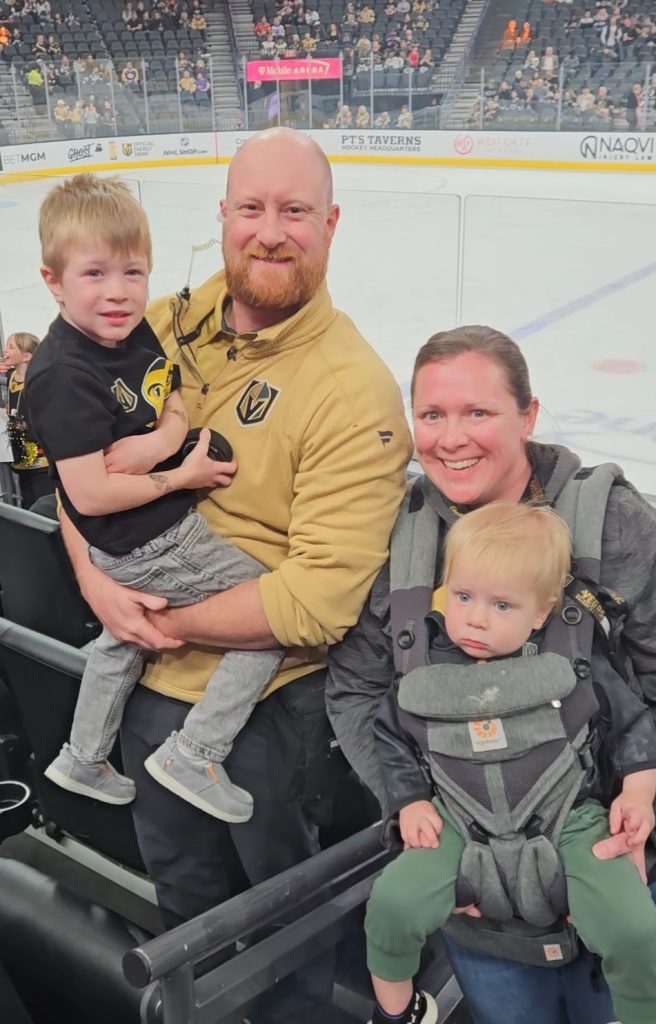
KM: Proud minority owner of the Green Bay Packers. My wife Lauren and I have two boys, Luke (4) and Beau (2). My favorite hobbies are mountain biking and golfing.
All photos courtesy of Kyle Moore.
Chad Walker, Head Athletic Trainer, Anaheim Ducks
PHATS: What made you want a career in the athletic training profession and how did you get your start?
CW: There was a sports medicine class at my high school taught by our Athletic Trainer Misi Babington who quickly became a mentor for me. I loved sports, and science always interested me so it was a perfect match. We were required to play 3 sports throughout the year and Misi allowed me to work in the training room as part of my spring sport. I loved everything about it and knew it was what I wanted to do for the rest of my life.
PHATS: You recently became Head Athletic Trainer at the Anaheim Ducks after six seasons as their Assistant Athletic Trainer. What surprised you most about the Head AT position?
CW: I have a newfound respect for how much work goes into the day-to-day that players and coaches never see. There is a lot of behind the scenes aspects to our jobs, but I was not totally aware of all of the work that goes on behind the scenes to make sure things run smoothly and our staff have everything we need to be successful.
PHATS: How do you see the role of the athletic trainer in professional hockey changing in the next 5-10 years?
CW: Over the past several years the overall staff sizes have grown a lot and I think this will continue to be the case down the road. I see athletic trainers continuing to evolve and be more and more a part of organizing larger medical staffs and taking on the quarterback role of making sure players and staff utilize and benefit from all available resources.
PHATS: What moment would you say was the highlight of your career so far?
CW: The highlight of my career to this point was getting offered the opportunity to come up to Anaheim from San Diego. It’s always been a dream to get the opportunity to work in the NHL and to get that call was truly special.
PHATS: Travel is such a huge part of this profession. What is one of your favorite hockey cities to visit and why?
CW: Montreal is always an awesome place to visit. The hockey culture there is incredible, and the game day experience is unlike anywhere else in the league.
PHATS: Can you recommend any type of schooling, courses, or training that would benefit a young athletic trainer trying to break into this field given the way sports have changed so much over the years?
CW: Manual therapy is a huge part of our treatment approach with the Ducks. Being able to make an immediate difference in how a player is feeling goes such a long way in preparing and returning to the ice after injury. Active Release Technique, or any of the manual therapy courses that PHATS has offered over the years goes a long way in helping to effectively treat hockey players. Additionally, understanding sports science and the data behind return to play decisions is a growing and evolving field. The various speakers and presentations that are offered at our annual summit are great, and the more knowledge and understanding one is able to gain of technology and data interpretation is invaluable.
PHATS: Who have been your mentors over the years and what is the best professional advice they have given you?
CW: I have been very fortunate to have a number of great mentors so far in my career. From Misi Babington, my High School ATC who first introduced me to the profession, to Bryce Nalepa who gave me the opportunity to learn as a young athletic trainer at Arizona State, and lastly Jason Serbus who has always been there and taught me so much when I first started working in Hockey. I still keep in touch with all of them to this day but one of the best pieces of advice I’ve received is a motto Serbs always brought up which is “attention to detail”. Not letting the little and simplest of things go unnoticed or unattended as these are often what leads to the most impactful results. There are enough parts of the job that are out of our control, that the more preparation and attention to detail we are able to utilize, the better healthcare we are able to provide our players.
PHATS: We will be in Orlando at our 2025 Hockey Summit before we know it. What was your favorite Summit memory?
CW: My favorite Summit memories are getting to know and network with athletic trainers and support staff from other teams and leagues that we don’t get the opportunity to see very often. We have such a diverse group that work in so many different settings, that I always find it fascinating to hear what other athletic trainers go through and the experiences they have in their various settings.
PHATS: How has being involved with PHATS and the annual meeting helped you professionally?
CW: PHATS has made a huge impact on my professional life/career. Being able to gather as a profession and group as large as we have become has really been amazing to see. The amount of brilliant people that we are able to network with and get to know better is phenomenal. Having athletic trainers, equipment managers, strength coaches, team physicians, and emergency response teams from around the world come together to learn and practice our skills is something distinctly unique to Hockey.
PHATS: What do you and your family look forward to in the off-season?
CW: Spending as much time as possible together. We try and plan one trip every summer. We love going on cruises, and road trips, and have been fortunate enough to see some incredible places as a family. My wife and I both have family within a 5-hour drive of Anaheim so we try to plan a couple of trips to see them every summer. Living in Orange County is a blessing as well, so we try and take advantage of the beaches and amusement parks that are in our backyard.
Tell us about yourself, your family and your hobbies.
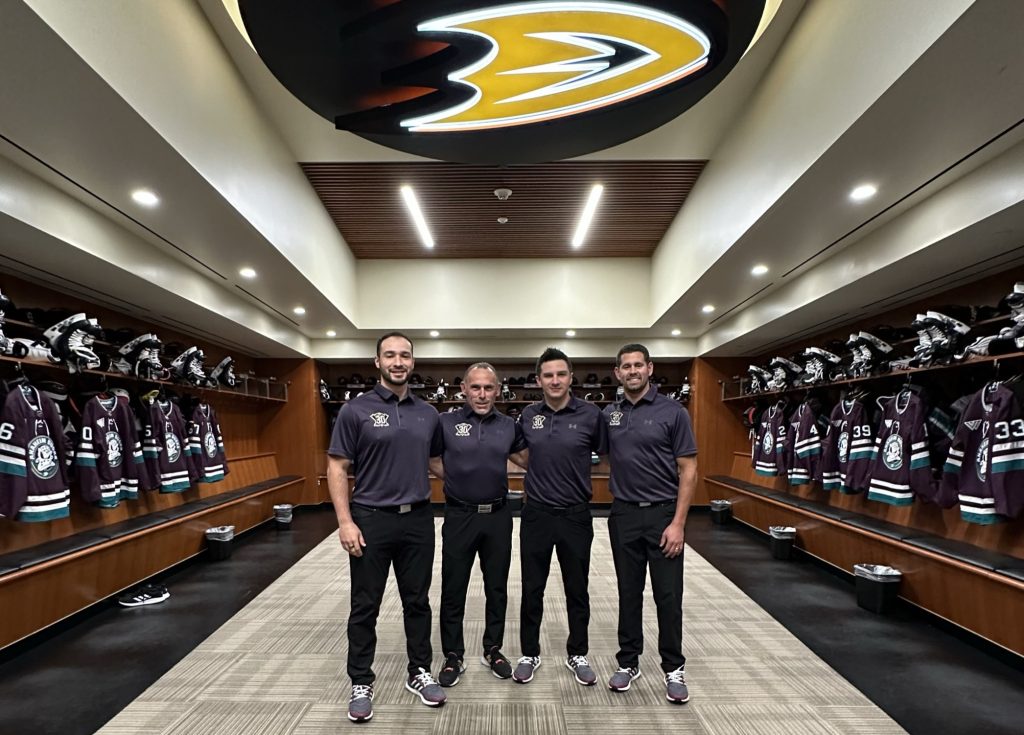
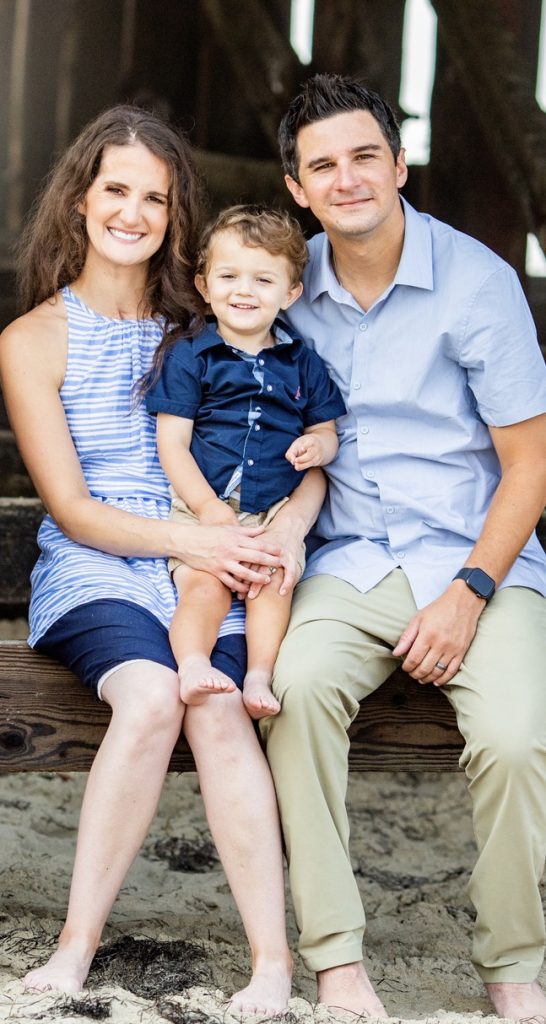
I was born and raised in Chandler, Arizona. My wife Becca and I live in Irvine with our Son Jackson (7). Hes currently in first grade and loves playing hockey and just started Jiu jitsu. When Im not working, we love hanging out at home and going on walks around our neighborhood.

All photos courtesy of Chad Walker.
Dennis Soetaert – Head Equipment Manager, Dallas Stars
SPHEM: What made you want a career in the equipment management profession and how did you get your start?
DS: I always enjoyed being at the rink growing up, whether it was playing, helping with the Kansas City Blades filling water bottles, and even working at a community rink. I enjoy being around a locker room and the fun atmosphere that comes along with it.
SPHEM: You have been with the Dallas Stars organization since 2006. For those just starting out, what characteristic would you say has contributed most to the longevity of your career?
DS: I think just being as prepared as you can be for each day. You have to be organized, be able to adapt to changes on the fly, and most importantly be available to the players and their needs. Come in with a good positive attitude every day!
SPHEM: Do you have a pre-game ritual?
DS: I do not have a pre-game ritual, I usually will just have a coffee or energy drink and make sure we are set to go.
SPHEM: What is something you experience that most fans watching the game wouldn’t know?
DS: I believe most fans know a lot of what we experience from social media these days, but maybe the fans don’t know about all the late nights and early mornings we have throughout the season.
SPHEM: What moment would you say was the highlight of your career so far?
DS: I have a two moments that have been pretty special to me. Winning the Calder Cup my first pro year with the Houston Aeros. Winning anything is always special. The other would be getting through 65 days in the bubble. Making the Stanley Cup finals was special even though we lost, just looking back and what we went through is hopefully a once in a lifetime thing.
SPHEM: Are there any advancements you are seeing in the Equipment field that you are really excited about?
DS: The biggest advancement right now is the automated sharpening. We do not have it yet but we have been doing our research and close to deciding on which one we are going to go with.
SPHEM: What advancements would you still like to see?
DS: I think just seeing the advancements in the automated sharpening has been interesting. I’m looking forward to see what is coming out next in our business.
SPHEM: What is your favorite NHL city to visit on the road and why?
DS: There are a lot of good cities in the NHL. I think I work in one of the favorites, but for me Nashville and Montreal are two of mine. Nashville is just a fun city to enjoy at night, and Montreal is a special place for my family as my father won a Stanley Cup while with the Canadians. I like to walk around that building to take in the history.
SPHEM: Who have been your mentors over the years and what is the best professional advice they have given you?
DS: There are a few people who have helped me get to where I am today. Rick Bronwell gave me my first pro job in Houston and taught me a lot while with the Kansas City Blades. Mike Aldrich was in Kansas City as well at the time and helped me out. I owe a lot to Steve “Sudsy” Sumner. We spent 17 years working together and I’m lucky enough to still have him around the rink and I lean on him for advice still.
SPHEM: What are you most excited for as the 2024-2025 Season begins?
DS: I am just excited to get everything going. All the prep work that we put in the summertime to be ready, the anticipation of a new season and the possibilities of what we can accomplish is exciting.
Tell us a little about yourself:
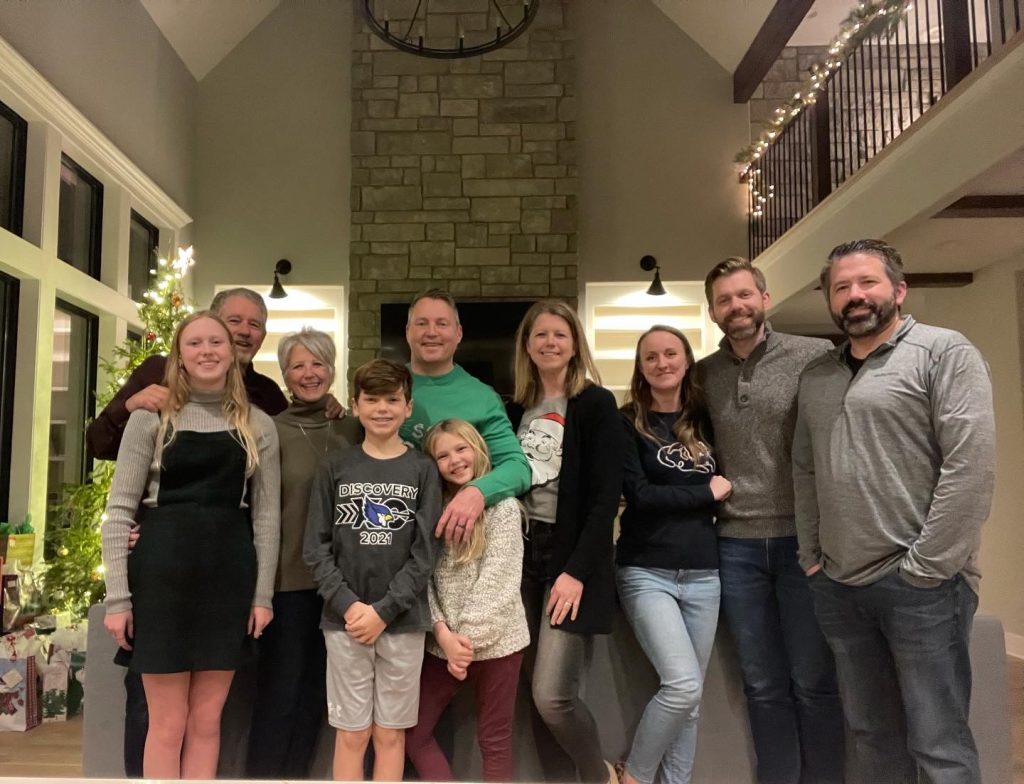
I was born in White Plains NY, but grew up in Kansas City, MO. My dad played in the NHL and after his playing career he was a coach/GM/scout while my mom had the most important job of taking care of myself and sister Cheryl and brother Brian.
In the summer I enjoy getting out and playing some golf, fine tuning my Pittmaster skills, and catching up with family.


All photos courtesy of Dennis Soetaert.
Scott Stanhibel, Head Athletic Trainer, New Jersey Devils
PHATS: What made you want a career in the athletic training profession and how did you get your start?
SS: I was lucky enough to have some training room exposure for some professional teams while I was in high school. I found it interesting and eventually decided that’s what I wanted to do. After I finished graduate school, I stumbled into hockey and really enjoyed it and have been incredibly fortunate to be able to stay in hockey for so many seasons.
PHATS: You began working with the New Jersey Devils organization in 2009 with the ECHL’s Trenton Devils, eventually moving on to the AHL’s Albany/Binghamton Devils, then joining the New Jersey Devils in 2020. For those just starting out, what advice would you give for staying and growing your career with one organization?
SS: I’m proud of the fact that I was able to start in the lowest level and then eventually work my way up to the highest level, all with the same organization. For me the biggest thing was to remain patient. Everyone wants to move up the ladder quickly, but I found that each league prepared me for the next. I just had to tell myself to be patient and when the opportunity came to move up, I would be ready.
PHATS: Are there any advancements you are seeing in the field of Athletic Training that you are really excited about?
SS: One thing that seems to be a pretty hot topic these days is sports science. I’m really interested to see what role it’s going to play years down the road. I think there are still some questions on how to utilize it with athletic training on a daily basis and its ability to predict and minimize injuries more effectively.
PHATS: What advancements would you still like to see?
SS: Sleep and recovery are two incredibly important things for the health and performance of any athlete. There are so many athletes across all sports and levels that struggle to sleep after games. I would love for us to find better ways to help players sleep better after competition.
PHATS: What is something you experience that most fans watching the game wouldn’t know?
SS: The game is so much different when you get to watch it from the bench. The game is so much more fun from the ice. Most fans would be surprised how much faster the game is, how different it sounds and definitely how much louder it is. It’s kind of like watching a movie on your phone compared to watching a movie in a theater, with an increased risk of being hit by a puck.
PHATS: Do you have a pre-game ritual?
SS: I don’t have any a pre-game rituals for myself. However, I tend to be involved in some of the players rituals. Whether they come into the training room before the game or something that might happen on the bench during warm-ups.
PHATS: What moment would you say was the highlight of your career so far?
SS: I have two moments that stand out to me. The first being in the playoffs two seasons ago. It was my first time in the NHL Playoffs and we beat the Rangers in Game 7 of the first round. Anytime you get to win a big game against a cross-town rival, it’s a pretty memorable moment. The other highlight would be beating the Flyers in the Stadium Series game at MetLife Stadium last season. It was my first outdoor game and again, when you get to beat a rival team in a special game, it always a good feeling that you don’t forget.
PHATS: What is your favorite NHL city to visit on the road and why?
SS: There are two cities I always enjoy going to for games. I was born in Chicago, so every time we go there for a game, I always enjoy it. The other city was Phoenix and it’s disappointing we won’t be playing there this season. I did most of my growing up there. My parents and brother are still there and it’s always great getting to see them during the season. Plus, the weather is usually nice there so that helps break up the east coast winter weather.
PHATS: Who have been your mentors over the years and what is the best professional advice they have given you?
SS: There are so many people that have helped mentor me over the years, it would be too many to list individually. I’ve had different people help me at different times of my athletic training career, each offering advice based on what my needs were at the time. However, the one thing that tends to be echoed by everyone is that you need to continue to learn. You can’t stop growing as a professional. Things are always evolving, so it’s important to stay current with the newest trends and techniques.
PHATS: What are you most excited for as the 2024-2025 Season begins?
SS: We get to open the upcoming season in Prague as part of the NHL Global Series. I think that’s going to be a lot of fun so I’m really looking forward to being a part of that experience. However, I hope to be really excited at the end of the season.
Tell us a little bit more about yourself…
I grew up in the Phoenix area. I went to college at New Mexico State University and did my graduate work at North Carolina State University. I spent a few years working at a high school in the Phoenix area before finally getting into hockey. I will be entering my 17th season in professional hockey. I do enjoy playing golf when I can and am a big Chicago Cubs and Bears fan. This summer, my dad and I finished our ballpark tour, seeing a game in every MLB park. It was a really great experience and I’m glad I got to share that with him.
All photos courtesy of Scott Stanhibel


Dave Dinapoli, Head Athletic Trainer, Florida Panthers
PHATS: What made you want a career in the athletic training profession and how did you get your start?
DD: I first became interested in athletic training while rehabbing from a dislocated shoulder during football in high school. The following year, our high school had us take a career survey. One of the top recommendations from that survey was a career in Athletic Training. While it was clear that playing professionally was not in my future, I decided to explore a career in athletic training. At the time, it seemed like a great way to combine my love for sport while staying a part of the team dynamic. As it turns out, I made the right decision. Upon graduation I did an internship in professional football. The hours were extensive, but it gave me a glimpse of what the profession could offer down the road.
PHATS: Tell us about your transition from working in the NCAA at Yale to joining the Panthers?
DD: At the end of the 2015/16 season, I received a call to gauge my interest in an opening with an NHL club. They were given my name as a potential candidate. At the time, I was head of the sports medicine department at Yale and wasn’t looking for a career move. After speaking with my family, I decided to at least explore the opportunity. They flew me down for an interview and I left with an offer. There was a lot of trepidation at first. I was extremely stable in my role at Yale, the pro ranks don’t offer that stability. Ultimately, I decided that I would regret not making the move, nothing ventured nothing gained. In the end all worked out.
As far as the job is concerned, there isn’t much of a difference between the college and pro levels from a medical perspective. Regardless of the level, the goal is to return an injured athlete to the highest level of performance in a safe and timely manner.
I think the most difficult part of the transition was navigating the red tape with regards to what the NHL, NHLPA and Clubs require to manage day to day operations (roster changes, cap space, workers comp and so forth). Yale was much less convoluted in this regard. The learning curve was steep at first. Fortunately, my assistant was Tommy Alva, a seasoned vet in the league and now Head of the Flyers. He took a lot off my plate while I got up to speed. Appreciate and thankful for all your efforts brother.
PHATS: For those just starting out as athletic trainers, what is the best piece of advice you were given when you began your career?
DD: The best piece of advice I was given didn’t even pertain to my career but rather life in general. A wise man once said: if you are the smartest person in a room full of people, you are standing in the wrong room.
My advice to others would be to surround yourself with people who will challenge you. Leave your ego at the door and be open-minded to change. We all tend to see things through one lens and often that lens can become clouded. Thinking outside of the box or looking at a scenario through a different lens can provide a completely different outlook or approach. When you have great minds around you and an openness to listen, you establish a collaborative effort where everyone is equally invested. Collaboration prevents stagnancy, stimulates skill set advancement and develops critical thought processes. My approach to rehabilitation and return is completely different today than it was 10 years ago simply by surrounding myself with likeminded individuals with a willingness to challenge the norm and learn together as a group.
PHATS: What is your favorite “on the bench” moment from a game?
DD: Growing up in the northeast with a vast majority of friends and family that are B’s fans, I’m sure I am going to hear about this. Without question, my favorite moment was game 7 against the Bruins in the first round of the playoffs last season. The emotional swing in that game was unlike anything I have ever been a part of. Down 3-1 in the series only to rally back and tie it up against arguably the most talented team in the NHL, was an emotional ride itself. The Garden was electric with us down by 1 with 1 min left to go in the third when we pulled Bobby. Season on the line, in the Garden with the B’s faithful cheering their home team on to close out the series, it was an electric atmosphere. I remember Monte burying one to tie it up and the building went silent. I went from a minute away from planning exit exams to a feeling of we have this. When Swaggy netted the game winner in OT, all the emotional ups and downs came to head. Not really clear on what ensued but I’m pretty sure I may have choked a few coaches giving out a bear hug or two. That is a moment that will stay with me forever.
PHATS: How has being involved with PHATS and the annual meeting helped you professionally?
DD: Most on the outside don’t realize how big of a role PHATS plays behind the scenes. The NHL would be a completely different place without PHATS involvement. Our members spend countless hours on different sub-committees to help improve the game. There’s a myriad of issues that we as athletic trainers, need to navigate daily. We all rely on each other heavily, especially when out of our market. You develop a level of respect for all that goes into what we do and a willingness to help each other out. The annual meeting is a great opportunity to get together with the league and address any issues that arise. More importantly, it allows us to spend some time with colleagues outside of the work setting.
PHATS: What is your biggest satisfaction of the job?
DD: I’d have to say it’s the relationships developed with those within the organization. The number of hours spent together in a pursuit of the same goal promotes a family like environment. The guys make it a fun place to be around, every day is something new. When you truly love what you do, it becomes a lifestyle rather than a job.
PHATS: What is your biggest challenge of the job?
DD: There are a lot of moving parts that happen behind the scenes. Making sure everyone is on the same page is critical to a winning culture. This requires a lot of communication between all departments. Carving out time in each other’s busy schedules can be challenging. Add in last minute changes and it becomes even more difficult. Fortunately, I work for a great organization where communication lines are open. Everyone accepts part of the load to ensure that nothing falls through the cracks.
PHATS: What is your favorite NHL city to visit on the road and why?
DD: I grew up in CT so I’ve spent plenty of time in NYC and Boston growing up. I always enjoy going back to those two cities. I’d have to say my favorite city to visit though is Montreal- vibrant pulse, food is great, and not a bad barn to play in.
PHATS: Who have been your mentors over the years and what is the best professional advice they have given you?
DD: I’ve had the opportunity to work alongside a few extremely talented people that have significantly impacted my career . The two most influential are Kai Aboulian ATC/PT from Yale and our current Director of Rehabilitation for the Florida Panthers Tim Wittenauer PT.
I worked with Kai for years and he is the type of person that never has a bad day. What separates Kai from the others is his ability to connect with an athlete in a way that allows them to take ownership of their rehabilitation process. The mind is extremely powerful and often overlooked when it comes to the rehab process. To achieve successful outcomes, patients need to trust in their clinician and the process. Our words, body language and actions often influence a patient’s mindset. As with any loss, whether in life or in this case an injured athlete, there are stages of disbelief, grieving and healing. The message we as clinicians put forth matters. Creating a positive environment for healing starts from the first interaction with a patient. A sentiment also echoed by our Director of Rehabilitation, Tim Wittenauer
Timmy has been the most pivotal to my career development. He is a world-class clinician and the most knowledgeable person I’ve ever seen with regards to the human body. His techniques and concepts have allowed us to eliminate technology in favor of the two most powerful tools that a clinician possesses, our minds and our hands. My skill set and treatment approach have grown exponentially under his guidance.
PHATS: What do you look forward to in the off-season?
DD: The offseason is a time to relax, rejuvenate and spend time with the family.
Tell us a little bit more about yourself…
Hobbies/ Interests: Jet skiing, riding my super moto.
Most often you will find me out in the garage wrenching on my toys.
Bucket List is to build a Shelby Cobra Replica car.







All photos courtesy of Dave Dinapoli
John Forget, Head Equipment Manager, Ottawa Senators
SPHEM: What made you want a career in the equipment management profession and how did you get your start?
JF: I always was particular with my equipment when I played, and I knew how to sharpen skates from working at Play it Again Sports when I was younger. I got my start in this business by sending an email to a Tier II team in Oshawa and that’s where this began.
SPHEM: You began in the AHL, then spent a season in Vancouver as an Assistant before working your way to Ottawa. Once there, what surprised you most about the Head Equipment Manager role?
JF: The biggest eye opener for me was the difference in the players themselves, just how guys view the game at this level.
SPHEM: What is one characteristic you feel is important in the role of Equipment Manager at any level of hockey?
JF: One of my favorite sayings is “You can’t have holes in your game.” Meaning, being organized, staying on top of things, being available for your players, and taking care of their needs.
SPHEM: What is your favorite “on the bench” moment from a game?
JF: Oh boy there’s a question. I think for me, well it wasn’t a great moment, but I took a puck in the eye. It did however, get me on the highlight reel and Coaches Corner.
SPHEM: They say once you stop learning, you stop growing. What is one lesson you learned as an Equipment Manager that gave you the most growth in your career?
JF: There are lots of challenges that come with this job. I have surrounded myself with an elite staff and together we provide the best service to our players and coaches. Also don’t sweat the small stuff, learn from your mistakes.
SPHEM: How has belonging to SPHEM and attending the annual meeting helped you professionally?
JF: I absolutely love going to the meetings. I have been attending for almost 20 years and look forward to them each year. I have met many people at the meetings. It’s a great way to network and catch up with colleagues.
SPHEM: What is your favorite NHL city to visit on the road and why?
JF: I don’t know if I could pick one city, but definitely the warmer climate locations would be up there. There’s something to be said about being in Florida in the middle of winter.
SPHEM: Who have been your mentors over the years and what is the best professional advice they have given you?
JF: There are a few people that I have looked up to over the years throughout my career. Bryan Boyes (Oshawa Generals) gave me my start in the OHL, and we chat often still today. Pat Langlois (Montreal Canadiens) hired me as his Assistant with the Hamilton Bulldogs. I have always leaned on him for advice. As well as Pat O’Neill and Brian Hamilton (Vancouver Canucks). I learned so much from these two guys cutting my teeth in the NHL.
SPHEM: What advice would you give your younger self if you were just starting in professional hockey?
JF: I would say take time to enjoy the ride, it goes by very quickly!!!!
Tell us a little about yourself:
I was born in Oshawa Ontario. I have two younger sisters Erin and Sarah. My parents Jay and Heather live in Bowmanville ON. My wife Sheena and I Live in Beckwith ON (20 mins from the Canadian Tire Center) and we have three kids, Holden 14, Hudson 4, and Hailey 14 months.
I love hanging out with my buddies around the pool in the summer as well as ATVing and snowmobiling. I got my start in with the Oshawa Generals in the OHL and then on to the Hamilton Bulldogs winning the Calder Cup in 2007. I went to the Utica Comets for their inaugural season in 2013. After that season, I went up to work with the Vancouver Canucks before getting the Head Equipment position with the Ottawa Senators. I also have worked with Team Canada 4 times at the Men’s World Hockey Championships, winning two Gold and 1 Silver medal.


All photos courtesy of John Forget
Dustin Stuck, Head Athletic Trainer, Boston Bruins
PHATS: What got you started in the athletic training profession and how did you get your start in Professional Hockey?
DS: I knew I wanted to be involved in sports as a young kid. Growing up, I was fortunate to watch my dad as an Athletic Trainer. The training room almost became my second home. Observing his career firsthand helped grow my passion for the field. I was able to see how he brought energy and positivity to the training room and that made it a dream of mine to hold a similar position one day.
I attended PHATS in the summer 2017 and heard about a couple of job opportunities in the AHL. I attended the PHATS networking event and put my name out there. Fortunately, a couple weeks later I heard from Mark Grotzinger (Head AT, Providence Bruins at the time) and the Bruins about interviewing and then accepted the Providence Bruins Assistant Athletic Trainer position for the 2017-2018 season.
PHATS: Your dad Dan “Beaker” Stuck is a long-time member, former Athletic Trainer for the Hershey Bears and a fixture at our Annual Conference. Tell us about your first memories of seeing him at work.
DS: When I was about 10 or 11 years old, my dad brought me in as a waterboy to work game nights at the old Hershey Park Arena. He would run home to pick me up after morning skates for him to be back in time for his pre-game hot tub routine. He taught me a lot as a young kid. He would have me make ice bags, help clean up small cuts, and have me assist the equipment managers in folding towels and laundry. He also wasn’t afraid of pulling a few pranks on me.
Unfortunately, I fell victim to the bucket of steam prank. Of all the things he taught me, the one thing that stood out to me was how detail oriented he was (specifically with his taping) and yet so fun and easy going at the same time.
PHATS: Tell us about your transition to the NHL from the AHL.
DS: After four years with the Providence Bruins, I was offered the opportunity to work under Don DelNegro in Boston as the assistant athletic trainer for the 2021-2022 season. It was not the easiest transition because of the COVID restrictions and protocols. As athletic trainers, we are used to wearing multiple hats and being the COVID officer during my first NHL season wasn’t the easiest task. Although it was challenging, I learned a lot and gained the trust of players, coaches and management. COVID aside, the NHL brings a different element of energy, passion and pressure. Everything is heightened and having a front row seat to the best players in the world has been an amazing experience so far.
PHATS: You took over as Head Athletic Trainer for Don DelNegro, who retired after 29 seasons in the NHL. What’s the best piece of advice he gave you?
DS: Working under Don DelNegro was an honor as he shared so much wisdom and knowledge with me. I would consider DD a good friend and mentor. He brought such a calming presence to the room and always found a way to make you laugh. When I came to the organization in 2017, he instantly supported me and showed me the ropes on how he manages the training room.
When moving up to the NHL in 2021, he taught me a day-in-the-life of being an AT in the NHL and the preparation needed to succeed. One thing DD taught me that I continue to try and do is being two steps ahead. As AT’s, multiple things can pop up at the same time and watching DD problem solve by thinking two steps ahead is something I will continue to learn and improve on. After spending my whole life around the AHL, DD made the transition to the NHL so much easier, and I will forever be grateful for his friendship and mentorship.
PHATS: How has being involved with PHATS and the annual meeting helped you professionally?
DS: Attending PHATS has helped me build relationships with trainers around the league as well as all the vendors who support us. Personally, the biggest takeaway from the PHATS meetings has been the evolution of emergency response with Rick Garner of Pro Sports EMS and the hands-on approach to learning the latest EAP protocols. PHATS does a wonderful job in giving us hockey-specific education to continue with the newest research.
PHATS: What has been the biggest change in the AT profession since the days of watching your dad to now, running your own NHL Training room?
DS: There are a lot of things that have changed over the years. The biggest change I see is the treatment style which correlates directly with the additional staff and resources available. I remember my dad doing a lot of his work solo. The staff included 2 coaches, an Athletic Trainer and an Equipment Manager. The staff has evolved greatly over the years. We now see a lot more hands-on treatment. With the additional staff, it gives us more time to evaluate players with advanced testing and screening protocols which allows us to provide players with specific treatment and rehab based on their personal needs. Rehab and treatments have become more versatile with practices like dry needling, ART, PRI, and advanced modalities, etc. There are a lot more resources out there to help us provide the best quality care for players.
PHATS: What is your favorite NHL city to visit on the road and why?
DS: There are a lot of cool and unique cities to visit. One of my favorite NHL cities to visit is Tampa, Florida. The hotel is great and right next to the rink. There are a good variety of restaurants, and everything is within walking distance. Lastly, you cannot beat the weather, especially in the middle of the winter.
PHATS: What professional goals are you working towards now?
DS: In this profession everyone’s dream is to win a Stanley Cup, which of course is the ultimate goal. I’d also like to have the opportunity to work at least 1,000 NHL games. From the personal side of things, I want to continue to grow as an AT and sharpen all aspects of my skill set. The one skill set that I put far above others and want to continue to be an expert in, is emergency preparedness and response.
PHATS: What do you and your family look forward to in the off-season?
DS: Quality time with my wife and daughter is always my top priority. We love to travel back to our hometown in Pennsylvania to visit family and friends, spend evenings at the beach, take a few vacations, and spend as much time outside as possible.
Tell us a little about yourself:
My wife, Rachel, and daughter, Emory, are my world. We absolutely love living in New England; being so close to the beach and mountains. One of our favorite places we have ever visited is Banff, Alberta. I grew up playing soccer, hockey, and baseball and ended up playing college baseball for three years before transitioning to club hockey in my senior year. I received my bachelor’s degree at Alvernia University located in Reading, PA and my master’s degree at Penn State University.


All photos courtesy of Dustin Stuck
Jamie Healy, Head Equipment Manager, Columbus Blue Jackets
SPHEM: What got you started in the equipment management profession and how did you get your start in Professional Hockey?
JH: While playing hockey in high school, I worked at the local arena pro shop and assisted the local IHL team (Kalamazoo Wings). Upon graduation from college, I was hired as the team’s equipment manager.
SPHEM: You recently made the transition to Head Equipment Manager after serving as Assistant for several years. What surprised you most about the new role?
JH: Several adjustments for me were the additional administrative responsibilities as well as delegating and being less “hands on” on a daily basis.
SPHEM: Last season you reached the 2,000-game milestone. What advice can you give to those just starting out to reach such a milestone.
JH: It is a privilege to work in professional hockey. You have to truly enjoy what you do as this job can be a grind. Listen and take advice from others while never stop learning along the way.
SPHEM: Can you share an equipment tip you’ve relied on to keep a player in the game?
JH: Having a helmet ready to be adjusted for a player on the bench at all times. Multiple times, this has helped a player from missing a shift.
SPHEM: How has being involved with SPHEM and the annual meeting helped you professionally?
JH: Networking with those in and out of this industry. Putting faces with the names and sharing tips and stories with other members.
SPHEM: Who were your professional mentors and what is the best advice they gave you?
JH: Clark “Corky” Osborn had a lot of patience teaching me the ropes back in Kalamazoo and he still helps out at our training camps here in Columbus to this day. He taught me many “tricks of the trade” and gave me advice on how to work with management and players in our minor league days together.
SPHEM: What is your favorite NHL city to visit on the road and why?
JH: Vancouver for the restaurants, shopping and the friendships I’ve made over the years there.
SPHEM: What professional goals are you working towards now?
JH: The obvious goal is to win the Stanley Cup.
SPHEM: What do you and your family look forward to in the off-season?
JH: We like to travel and visit our family cottage on Lake Michigan.
Tell us a little about yourself:
JH: My wife Darlene and I, have two sons, Garrett (28) and Brendan (25) who are both engaged and working in New York City and Boston. I enjoy being outdoors, biking and attending the Indy 500.


All photos courtesy of Jamie Healy.
Bobby Hastings – Head Equipment Manager, Toronto Maple Leafs
SPHEM: What made you want a career in the equipment management profession and how did you get your start?
BH: To be honest, I didn’t even know this career existed. It wasn’t until I was in Grade 11 at St. Michael’s College School that the path to being an equipment manager presented itself, and I started working with the school’s junior A varsity and major junior teams. In 2001, I was hired by the Maple Leafs as an equipment assistant, and the rest is history.
SPHEM: You began with Toronto in 2001 as an Equipment Assistant and worked your way to Head Equipment Manager in 2020. What surprised you most about the Head Equipment Manager role?
BH: Nothing particularly surprised me about the job itself. It was more the amount of leadership and oversight required, some of those day-to-day managerial tasks that hadn’t been on my plate before.
SPHEM: Equipment managers are known to think fast on their feet. Can you share your favorite hack or DIY creation in an equipment emergency?
BH: Equipment managers are often in a position where we have to think quickly. Fortunately, we are regularly surrounded by other great managers at every stop who can provide any materials necessary to solve a problem. For instance, when we trade for a player while on the road, we rely on the local crestor contact to get the new player set up in a jersey and make that transition seamless.
SPHEM: Good relationships with vendors are key to getting your players what they need. What advice can you give to equipment managers, just starting out, to build those relationships?
BH: The best approach is to cultivate relationships with every vendor you can, big or small. You never know who you might have to contact down the road or where people you meet with will be working at a given time. Establishing a trusting rapport with as many people as possible will only benefit you in the long run.
SPHEM: What is the most challenging aspect of the equipment profession these days? What advice can you give to others who may be working through this challenge as well?
BH: The equipment profession has become a 24/7 job. There are no days off, only days away from the rink. The words I have come to live by are, expect the unexpected. Preparedness is key. My goal is to be ready for any curveball that hits and doing that starts with anticipating challenges before they even come around.
SPHEM: How has belonging to SPHEM and attending the annual meeting helped you professionally?
BH: The annual conference is about education and connections. Yes, we see others in our field on road trips but it’s not the same opportunity to truly discuss the business and build those relationships that are so critical to our overall success with the largest diversity of contacts available to us.
SPHEM: What is your favorite NHL city to visit on the road and why?
BH: Tampa Bay because I love warm weather.
SPHEM: Who have been your mentors over the years and what is the best professional advice they have given you?
BH: Brian Papineau gave me my start with the Leafs, and we worked together for 20 years. He was instrumental to my overall development. Darren Granger, Paul Boyer and Pat O’Neill are all people I’ve looked up to since I was the visiting team liaison with Toronto and I’ve strived to emulate the standard they’ve set in their careers.
SPHEM: What do you want your peers to know about you that they don’t already know?
BH: I was born in Halifax, Nova Scotia but raised in Toronto and was a lifelong Maple Leafs fan before getting a chance to work for them. I’m also a diehard Notre Dame football fan. Go Irish!
Tell us a little about yourself:
I’m fortunate to be surrounded by great friends and family in Toronto, including my wife Kristen. Without that backbone of support in my life I know I couldn’t give all that I do to my career. For that I am extremely grateful. I’m also lucky she shares my passion for sports, especially golf, which we love to do together in the offseason.


All photos courtesy of Bobby Hastings.