
Chad Walker, Head Athletic Trainer, Anaheim Ducks
PHATS: What made you want a career in the athletic training profession and how did you get your start?
CW: There was a sports medicine class at my high school taught by our Athletic Trainer Misi Babington who quickly became a mentor for me. I loved sports, and science always interested me so it was a perfect match. We were required to play 3 sports throughout the year and Misi allowed me to work in the training room as part of my spring sport. I loved everything about it and knew it was what I wanted to do for the rest of my life.
PHATS: You recently became Head Athletic Trainer at the Anaheim Ducks after six seasons as their Assistant Athletic Trainer. What surprised you most about the Head AT position?
CW: I have a newfound respect for how much work goes into the day-to-day that players and coaches never see. There is a lot of behind the scenes aspects to our jobs, but I was not totally aware of all of the work that goes on behind the scenes to make sure things run smoothly and our staff have everything we need to be successful.
PHATS: How do you see the role of the athletic trainer in professional hockey changing in the next 5-10 years?
CW: Over the past several years the overall staff sizes have grown a lot and I think this will continue to be the case down the road. I see athletic trainers continuing to evolve and be more and more a part of organizing larger medical staffs and taking on the quarterback role of making sure players and staff utilize and benefit from all available resources.
PHATS: What moment would you say was the highlight of your career so far?
CW: The highlight of my career to this point was getting offered the opportunity to come up to Anaheim from San Diego. It’s always been a dream to get the opportunity to work in the NHL and to get that call was truly special.
PHATS: Travel is such a huge part of this profession. What is one of your favorite hockey cities to visit and why?
CW: Montreal is always an awesome place to visit. The hockey culture there is incredible, and the game day experience is unlike anywhere else in the league.
PHATS: Can you recommend any type of schooling, courses, or training that would benefit a young athletic trainer trying to break into this field given the way sports have changed so much over the years?
CW: Manual therapy is a huge part of our treatment approach with the Ducks. Being able to make an immediate difference in how a player is feeling goes such a long way in preparing and returning to the ice after injury. Active Release Technique, or any of the manual therapy courses that PHATS has offered over the years goes a long way in helping to effectively treat hockey players. Additionally, understanding sports science and the data behind return to play decisions is a growing and evolving field. The various speakers and presentations that are offered at our annual summit are great, and the more knowledge and understanding one is able to gain of technology and data interpretation is invaluable.
PHATS: Who have been your mentors over the years and what is the best professional advice they have given you?
CW: I have been very fortunate to have a number of great mentors so far in my career. From Misi Babington, my High School ATC who first introduced me to the profession, to Bryce Nalepa who gave me the opportunity to learn as a young athletic trainer at Arizona State, and lastly Jason Serbus who has always been there and taught me so much when I first started working in Hockey. I still keep in touch with all of them to this day but one of the best pieces of advice I’ve received is a motto Serbs always brought up which is “attention to detail”. Not letting the little and simplest of things go unnoticed or unattended as these are often what leads to the most impactful results. There are enough parts of the job that are out of our control, that the more preparation and attention to detail we are able to utilize, the better healthcare we are able to provide our players.
PHATS: We will be in Orlando at our 2025 Hockey Summit before we know it. What was your favorite Summit memory?
CW: My favorite Summit memories are getting to know and network with athletic trainers and support staff from other teams and leagues that we don’t get the opportunity to see very often. We have such a diverse group that work in so many different settings, that I always find it fascinating to hear what other athletic trainers go through and the experiences they have in their various settings.
PHATS: How has being involved with PHATS and the annual meeting helped you professionally?
CW: PHATS has made a huge impact on my professional life/career. Being able to gather as a profession and group as large as we have become has really been amazing to see. The amount of brilliant people that we are able to network with and get to know better is phenomenal. Having athletic trainers, equipment managers, strength coaches, team physicians, and emergency response teams from around the world come together to learn and practice our skills is something distinctly unique to Hockey.
PHATS: What do you and your family look forward to in the off-season?
CW: Spending as much time as possible together. We try and plan one trip every summer. We love going on cruises, and road trips, and have been fortunate enough to see some incredible places as a family. My wife and I both have family within a 5-hour drive of Anaheim so we try to plan a couple of trips to see them every summer. Living in Orange County is a blessing as well, so we try and take advantage of the beaches and amusement parks that are in our backyard.
Tell us about yourself, your family and your hobbies.
I was born and raised in Chandler, Arizona. My wife Becca and I live in Irvine with our Son Jackson (7). Hes currently in first grade and loves playing hockey and just started Jiu jitsu. When Im not working, we love hanging out at home and going on walks around our neighborhood.
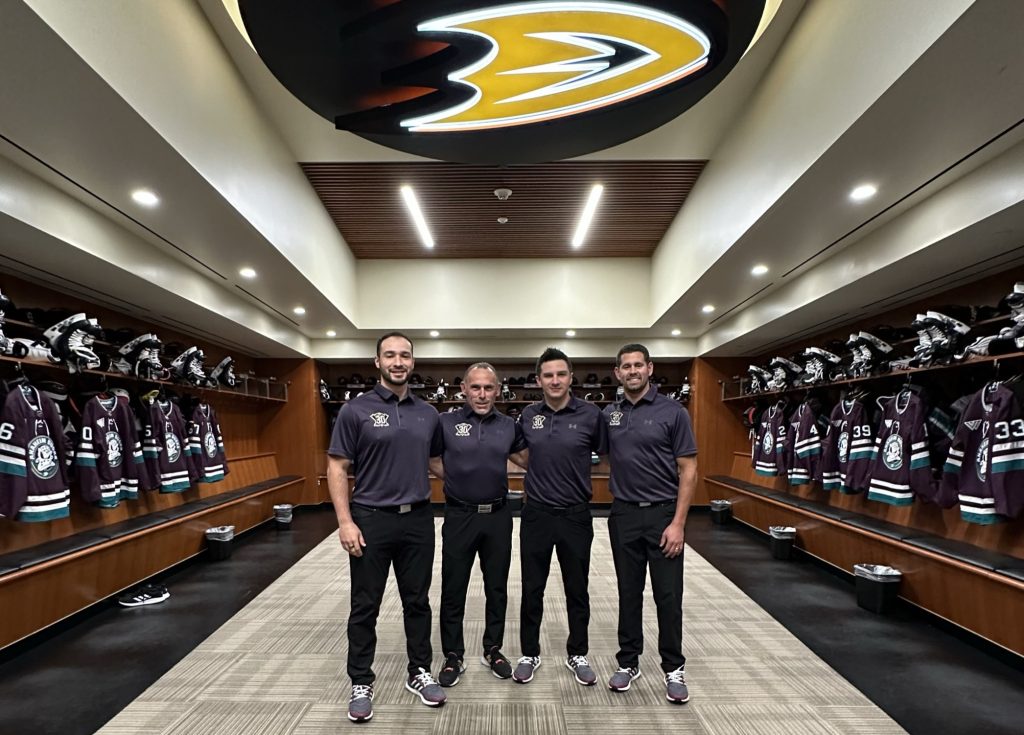

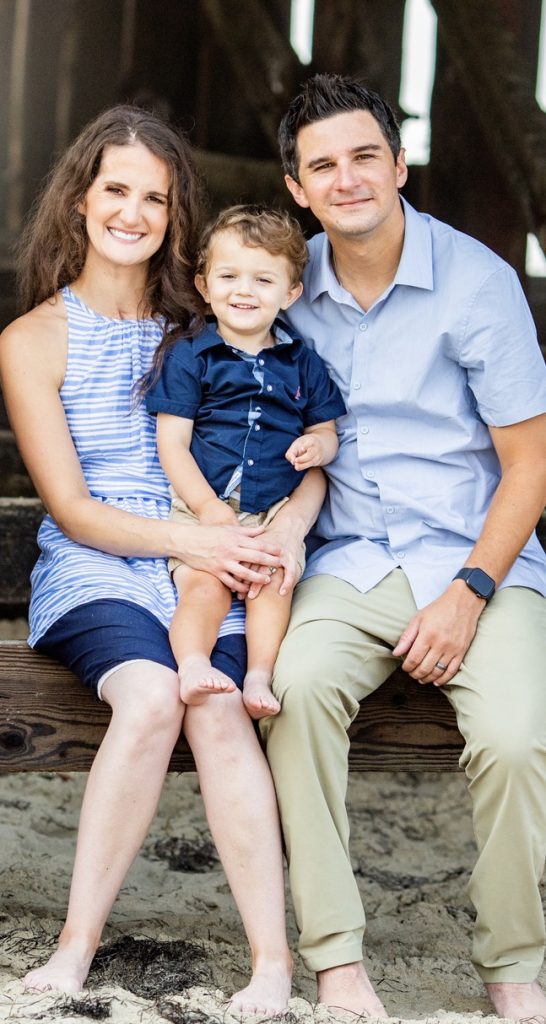
All photos courtesy of Chad Walker.
Joe Huff, Head Athletic Trainer, Anaheim Ducks
PHATS: What got you started in the athletic training profession and how did you get your start in Professional Hockey?
JH: I’ve always been interested in sports and growing up participated in whatever the current season was. During high school I had a couple of injuries that created an awareness for the Athletic Training profession and that’s when I decided I wanted to pursue it in College. At Iowa State one of the sport assignments for student Athletic Trainers was covering the club hockey team and I volunteered for that. After graduation I went to the NATA convention and searched the job boards. There was a posting for a Central Hockey League team in Macon, Georgia and I was able to interview for it there.
PHATS: You are beginning your 10th season with the Anaheim Ducks. Previously, you worked with their AHL affiliate, can you tell us about that transition? What advice would you give to a member changing leagues this season?
JH: For me the biggest factor was familiarity and having rapport with people there. I had been to several camps and up for playoff runs with current staff and players. Having around 12 of the players previously in the American League was probably the biggest benefit to transitioning to Anaheim.
PHATS: After 24 years in professional hockey, you most likely have seen a lot of change, ups and downs. What advice can you give to those just starting out in search of the same type of longevity?
JH: First you’ll need a strong and supportive family. After that staying even keel. People look for us to be calm and balanced in moments of distress. You may be helping someone through a terrible moment in their life/career. Take pride in navigating those moments. Last but not least, be ready to work hard and enjoy doing the work.
PHATS: What is your biggest satisfaction of the job?
JH: I’d have to say helping athletes through injuries and those moments where they believe things couldn’t be worse, then seeing them return to the ice. I also really enjoy helping the group solve different problems or issues that come up and getting it done without most people ever noticing.
PHATS: What is your biggest challenge of the job?
JH: I would probably have to say just navigating different situations that come up during a hockey season can be a big challenge. Making sure everyone understands you have their best interests in mind. Being that link between injured player, team physicians and management is another challenge that we as athletic trainers face during the season.
PHATS: What would you say has been the best advancement in Athletic Training and what would you still like to see?
JH: I feel like in most things today technology is the best advancement. Whether it’s been advancing and adapting different modalities. Or just the use of devices to document, communicate and keep good notes.
PHATS: What is your most memorable professional moment as an athletic trainer?
JH: I’ve been lucky and over the years have had lots of different kinds of memorable moments. Being part of a group that navigated a cardiac event involving a visiting team’s player stands out more than most. Using the skills that we all practice and have been put into place by and for our group was very rewarding. Obviously first and foremost was having a good outcome. A lot of different things went well that day and everyone did their part.
PHATS: Who have been your mentors over the years and how have they inspired you?
JH: Lucky for me most of my early mentors and instructors at Iowa State are still there and I’ve been able to make it back a few times. Frank Randall is one. Frank is the only one to retire after a long career and being one of the pioneers of the profession. Mark Coberley, Denise O’Mara, Mary Meier and Shannon Peel are all still there from when I was a student. Chuck Conner showed me the ropes during my first season in professional hockey and Marty Anderegg as well.
PHATS: What do you want your peers to know about you that they don’t already know?
JH: I was a member of the X-Games sports medicine staff and covered different events from 2001-11.
Tell us a little about yourself:
JH: I grew up in a small town, just north of Des Moines, Iowa. My parents, sister and her family all live in Kansas City now. I’ve worked in 5 hockey leagues, and we’ve lived in 5 states, Iowa and Georgia twice. My wife and daughters have been along on this journey, and I wouldn’t be here without their support.


All photos courtesy of Joe Huff.
Ducks honor first responders who treated Blues’ Bouwmeester. Anaheim, St. Louis staffs receive ‘Lifesaver Award’ for their efforts to revive defenseman on Feb. 11 . Click here to read more.
For these articles and much more be sure to Like our Facebook page, PHATS/SPHEM Offical
St. Louis Blues defenseman Jay Bouwmeester, a Stanley Cup champion, son, husband and father, is alive because the right combination of people click here to continue reading
For these articles and much more be sure to Like our Facebook page, PHATS/SPHEM Offical